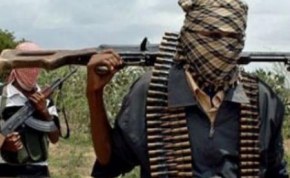
The past half a decade has been perhaps the most challenging years since Nigeria's return to civil rule in 1999.
Literally, the fate of some 160 million citizens have been caught
between nationalist insurgents in the south, and Islamist terrorists in
the north, with no relief from a distressing canopy of spectacularly
poor evidence at governance, and thieving politicians left, right, and
centre.
Narrating these evidently polarizing experiences on a daily basis,
falls on the media, that has had a mixed bag of brilliant moments and,
just putting it straight, sometimes appalling results of what looks like
a Kafkaesque sequence of events.
What is clear, however, from the perspective of the media, is that
these five years also represents perhaps the most dismal period in the
over 150-year institutional biography of one of our most heroic national
citadels.
Constrained by inter-communal, inter-faith, minority, and other
diversity issues, political reporting in Nigeria can be a test for any
journalist, and heightened with the added challenges posed by a swelling
climate of intolerance, fueled by the reign of criminal gangs who are
sustained through official corruption, oil theft, the now lucrative
kidnapping business, politically-financed terror squads, ethno-national
mobs, or private security gangs.
These are the notations of impunity, the hydra-headed monster that
now threatens freedom, rights, and ultimately, the democratic
aspirations of citizens. In all climes, reporting events like these
comes at dreadful costs; and the Committee to Protect Journalists [CPJ],
an independent, , nonprofit organization that works to safeguard press
freedom worldwide, has diligently followed the trails of such reporters,
keenly documenting the heroism of such brave messengers, under
capricious regimes, through whom daily history is brought to us.
Now, the same CPJ is alerting us in Nigeria that this wave of
impunity has finally come home to roost. In its 2013 Impunity Index
release in New York today, CPJ states chillingly: "Nigeria has become
one of the worst nations in the world for deadly, unpunished violence
against the press."
The CPJ global index calculates unsolved journalist murders as a
percentage of each country's population, and found this year that
soaring impunity rates were also recorded in Somalia, Pakistan, and
Brazil.
In the five-year matrix taken for this computation, the CPJ cites the
unresolved murder of Channels TV reporter, Enenche Akogwu; the killing
of Nathan Dabak and Sunday Gyang of the Christian Times in Jos; Zakariya
Isa of NTA Maiduguri; and Bayo Ohu of the Guardian Newspapers in Lagos.
Blaming "militants in the north and politically inspired aggression
nationwide" for the growing impunity in the land, the CPJ Impunity Index
puts Nigeria in the category of a dozen countries where journalist
murders occurred from January 1, 2003, through December 31, 2012, and
remain unsolved. The index, published annually, considers cases unsolved
when no convictions have been won.
There are strong lessons for Nigeria here. Slamming what he recently
characterized as "a choreographed attempt to deliberately cast the
administration in bad light," the spokesman for the Nigerian presidency,
Mr. Reuben Abati, a newspaperman and lawyer, pretentiously claimed,
"This government is proud of its record on press freedom, its
relationship with and promotion of access for the media and civil
society."
The administration, as Mr. Abati argues it, actually expects
gratitude from Nigerians on account of "its commitment to press freedom
times over [because the] Freedom of Information Bill (FOI) was signed by
this President into law and under this government the Nigerian print
and electronic media has grown in number, reach and in terms of freedom
to practice."
True, but it was also under the watch of this president that the most
elaborate and illegal assault on the privacy and constitutional rights
of citizens had been initiated in the post-independence history of this
nation.